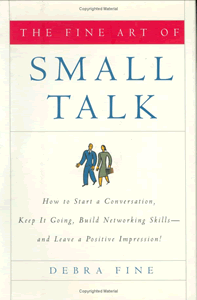
The Fine Art Of Small Talk By Debra Fine
I am an introverted person. I am shy and quiet and I find I have a pretty good time just sitting back and listening to a group of people talk. This has been good for me, but it has also cut me off from a lot of things that life has to offer; I have declined invitations to events or get-togethers because of my fear of being in crowds and having to talk to strangers. I was always so nervous; what if I have nothing to say?; what if no one wants to talk to me?; what if I go and have a horrible time?
As of late, maybe the last year or so, I having been doing a lot try and change my attitude. Instead of saying "No" to things be default, I am trying to say "Yes," and getting myself excited at the thought of a new experience. I started this transformation in the technology field, such as at my local CFUG where I feel much more comfortable, and I have expanded out from there. In fact, I just tried Duck for the first time this weekend - a small step for most, but a HUGE step for the "new Ben."
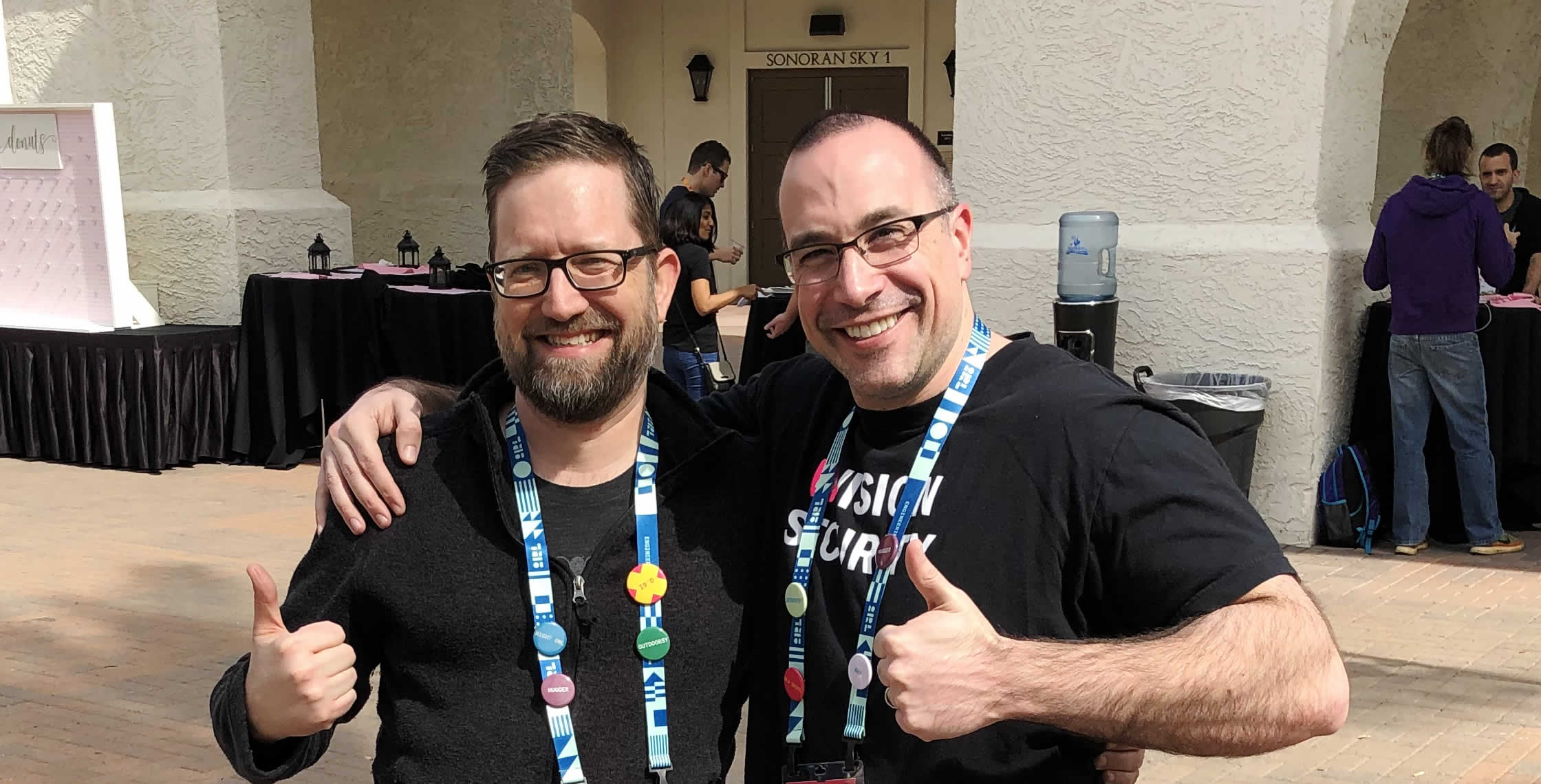
As part of this evolution, I am trying to work on my interpersonal skills. Having been able to hang out with Clark Valberg lately, who is himself a master conversationalist and expert networker, I see how much my inability to talk to strangers has held me back from personal growth. Trying to mimic much of what Clark does has helped, but I thought I would take a look and see what other pointers there were out there.
This weekend, I finished the book, "The Fine Art of Small Talk," by Debra Fine (subtitled, How to Start a Conversation, Keep It Going, Build Networking Skills - and Leave a Positive Impression). It's basically a How To manual for making chit-chat with people, whether they are old friends or fist time acquaintances.
| |
|
|
||
| |
 |
|
||
| |
|
|
The book was a very quick read and full of great tips. It went over all aspects of small talk conversation including how to listen, how to stand / sit / look, how to talk, what kind of questions to ask (open ended vs. close ended), what kind of faux pas to look out for, and even to be conscious of all the little things that we say all the time that subtly influence the way other people in the conversation feel (ex. never say, "I'm not sure" when you don't know something as it expresses self-doubt - you either know or you don't, be decisive).
Of course, as with any situation that is surrounded by insecurity and fear, the hard part is not so much applying what you've learned, it's having the conviction to get out there and to try to apply what you've learned. Making that first mental step is the biggest hurdle; even from my own limited experience as "Ben 2.0", I can see that once you go over the edge, moving forward just kind of takes care of itself.
So anyway, it's a good book considering is content and it's ease of reading. I would definitely recommend it to people who feel uncomfortable in social situations as it helps to put things in perspective.

Reader Comments
i started reading your post with the small talk programming language in mind and it through me for a loop. I'm like, what the hell does being shy have to do with programming o_O.
Ha ha ha, that's funny.
I'd tell you to just embrace your inner introvert, but that would just make your inner introvert very uncomfortable...
Weird...From reading your blog, I wouldn't have pegged you as introverted (especially with the body building stuff). I was very shy for most of my life (overprotected, momma's boy through and through :) ), but finally managed to break out of my shell junior year in high school (and college helped me out even more). I had it all...fat, glasses, nerd/geek, what more could an introvert ask for :) I managed to lose a lot of the weight which helped quite a bit with the self-esteem. In the end, I learned to make fun of things. I guess I used humor to get by. Being one of the smart kids helped with the snappy comebacks. From there I managed to line up a few funny stories which always seemed to help start a conversation (or join in one that had already started). In college (and just after college) there was a lot of "one night I was drinking...", but those are usually always good for a laugh. As you start to get out more, you have more stories to bring to the table, and more experiences, so it all just keeps compounding. If you can, just enjoy it. No point worrying, I say (now). If you make an a$$ of yourself, so be it, sucks at the time, but makes for a funny story later on :)
@Gareth,
Certainly, I think my blog has helped me a lot to improve my outgoingness in the non-digital world; I think the transference comes from helping me formulate ideas and through better self-examination. But certainly, I much more comfortable in a technology setting than I am in straight-up social setting. For example, the feeling of being around 1000 people at CFUnited is not nearly at daunting as the thought of being around 50 people at a house party.
I think another big hurdle for me is the fact that I don't drink. As such, I lack that social lubricant aspect; but more than that, being the sober guy around a bunch of drunk people is not always good times :) This doesn't really affect me on a friendly level - most all of my friends drink and when we go out, they usually get something to drink, which is totally fine. But, I never really wanted to be included in the younger days when people would go out with the goal of getting drunk. As such, I was never exposed to that highly social environment when I was younger. Now, trying to creep into it.
Ben, without having read the book, I'm not sure (!) I agree with the advice to avoid saying "I'm not sure". It's true that extroverts (the vast majority of people) tend to be decisive and respect decisiveness in others, but I'd argue it's a virtue of introverts that we tend to see the merits on both sides of an issue and take time to weigh them up rather than forming snap judgements. Extroverts need to change too.
Another book you should check out is "The Introvert Advantage: How to Thrive in an Extrovert World" by Marti Olsen Laney. I found her neurological explanations of why we're different quite compelling.
@Julian,
That book looks interesting, but from the comments it seems that it is more about understanding yourself and being comfortable with being an introvert. I feel that I am already at that point. I am quite comfortable with who I am as a person, I love my alone time, and I feel very independent.
What I want to do, though, is venture out of that comfort zone and into new situations that offer new experiences. And, like I said, in my original post, I think that just making that mental leap is by far the biggest hurdle. But certainly, the next time I am at Barnes & Noble I will flip through it.
Ben,
This reminds me of a funny story. Way back in 1991, a good friend of mine and I were sent by our company to the Xerox PARC facility to learn Smalltalk (the programming language). My friend's wife was telling her friend about this. The friend remarked "Well, that's good of the company to send them. They can learn how to make casual conversation."
So, Smalltalk != small talk is, I suppose, the message.
@Hal,
Not the same, but perhaps, equally important :)
Being introvert or extrovert is something that changes through time. I am not sure why people get hang up on these two terms. It's just because our self and body keep changing in time. But perhaps among other issues that categorized in the possibility ferris wanli changing in terms of fusion.
@Ferris,
I don't think people get hung up on the terms; I think they are used merely as a way to make sense of the "current" self. My allowing ourselves the ability to self-identify, it gives us a starting point from which to work if we feel like we want to change ourselves in some way. It's like they say, how can you know where you're going if you don't know where your from.
I would consider myself to be an extrovert. I have always been an extrovert, and I am happy with that. I don't think everyone necessarily changes between the two, as I have only been one way my whole life.
There are some things about extroverts that you have to learn in order to get along or to keep from getting frustrated with things. For instance, as an extrovert sometimes you have to let someone else do the talking, and sometimes it is hard just to sit back and listen. Being a particularly strong extrovert, sometimes it is very frustrating if there is a large group of people, and all or most of them are extroverts, and all of them are only interested in getting THEIR opinion out there, and you feel you have to shout or do something extraordinary to get your opinion out there, OR you feel like your opinion doesn't matter to anyone. Also, when it comes to interpersonal relationships, I may not be as good at those as I am in front of groups. Especially if I am supposed to talk to someone I have nothing in common with. Sometimes it is so much easier for me to talk to a large group than have a close and/or personal conversation with someone I barely know and/or have very little in common with. But I do think sometimes it is good for an extrovert to be with an introvert...because they can compliment each other. And I think having two of the same can cause problems, especially if one or both of you is strongly the same way. I think two extroverts could get on each other's nerves and could be stepping all over each other, whereas two extreme introverts might have trouble finding something to say or talking to each other. I know for a fact with my last boyfriend, I felt like HE was always in the spotlight, and always had to be, and that ANNOYED me. Like if we picked a song to sing together, he'd always pick one where the guy had the dominant part and the girl hardly sang at all. And the guy always started out in all of the songs. And I tried to give him the spotlight sometimes, and I ALWAYS supported him and went to all of his plays and everything, but it was just so annoying that even as much as I supported him and as much as I gave him the spotlight, he ALWAYS had to have it and ALWAYS had to have more. You'd think since I supported him and gave him the spotlight so much, he'd give a little and let me shine from time to time. But it was rare he would support me just in and of itself or let me be in the spotlight for once.
@Anna,
I don't mind someone who needs some spotlight action; the one thing that really gets under my skin is people who don't have an "indoor voice". You know these kinds of people - the ones who speak the same in a crowded room as they do in an empty room. I don't know if that is an "extrovert" thing or simply a "rude" thing :) but I have no patience for that.
Hi Ben,
I was searching online about 'The Art of small talk' when I happened on your web page. It just so happens that I am introverted but warm and quite comfortable in my skin.
Obviously, mastering the art of small talk will help me conversationally,(although I am not totally inept) for instance, I think you are cute. This is obviously an 'extroverted' thing to say, but writing it on the screen makes it a little less daunting.
You might want to try my style at getting good at small talk. Lol.
Joyce
Hi Ben, Im from the Philippines. I love your article and I really can relate! I was just at the bookstore yesterday trying to grab this book, unfortunately, the bookstore ran out of stock. Alternatively, they offered me two books by Leil Lowndes entitled "How to Talk to Anyone: 92 Little Tricks for Big Success in Relationships" and "How to Instantly Connect with Anyone: 96 All-New Little Tricks for Big Success in Relationships". I haven't read these books though but i've just had a quick browse of them. And i think,they're really helpful too!I also recommend people to join Toastmasters Club (its an international public speaking organization)if they want to develop their speaking skills/interpersonal skills and build confidence =) 'Toastmasters' has really changed my life! More power to your blog!
@Alica,
I have heard nothing but *great* things about the Toastmasters club. I've actually been invited to it (I have a friend who goes), but I have not yet worked up the courage to attend. One of these days, I'll just have to have at it. I've told multiple times that it transforms lives and you seem to say so as well.
Thanks for further encouragement. I'll check it out of these days.